(I WANT TO THANK FONEARENA GADGET REVIEWS FOR THIS REVIEW)
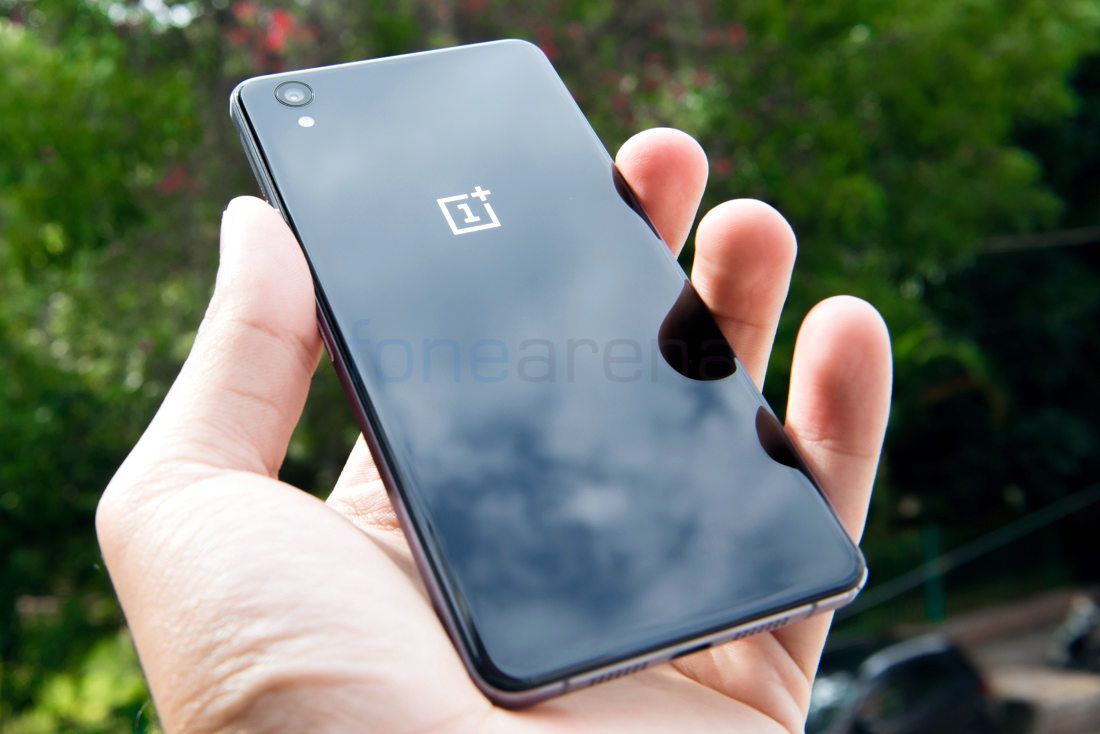

You’ll have to admit that the OnePlus X does remind you quite a lot about the iPhone 4 and 4S but in a good way. The design feels really premium, perhaps even more so than the OnePlus 2 despite being a lower end handset or rather something that is priced lower. The build quality is really great and it feels great to handle thanks to the small size. While, phablets are slowly becoming more and more accepted by people, there are still quite a few who love handsets that are around 5 inches in display size as it is considered a sweet spot. Despite being a person who loves big screens, I myself agree with that as you just get a sense of freedom and controls with smaller handsets that you just don’t get with phablets. Also considering that most people use cases on their phones, it becomes all the more difficult to handle.

At the front, there is a 5-inch display that takes up most of the real estate. Above it, you have the 8 Megapixel front-facing camera, the earpiece as well as the ambient light and proximity sensors.At the right side, you have the volume rocker and power button. While they provide good haptic feedback, their positioning does seems bit off. We would’ve liked to have the power button above the volume rocker button as that is where our hands seem to rest by default. However, luckily, you do get used to the positioning after a day or two of use. Above the volume rocker, you also have the hybrid dual nanoSIM slot.


At the left side, you have the 3 stage alert slider that can be used to control the notifications. You can choose between all notifications, priority notifications or no notifications at all.At the bottom, you have the micro USB port in the middle along with two sets of grills on either sides. The left grill houses the speaker while the right grill is a dummy to maintain the symmetry and actually houses the primary microphone. You also have the antenna cutouts here.
At the back, you have the 13 Megapixel primary camera with LED flash at the top left corner. Below it, you have the OnePlus logo in a silver finish. At the bottom, there is some regulatory information as well but they have made sure that it doesn’t standout and ruin the look of the phone. You will be able to see it only when you look carefully.
Display
For the first time, OnePlus has gone all out and fitted an AMOLED screen onto their devices. While the OnePlus 2 display was a step in the right direction as OnePlus decided to focus on brightness, colour, viewing angles etc. instead of just sheer resolution, the OnePlus X is where they truly did it right.
The OnePlus X has a beautiful display that looks great in all environments, be it indoors or outdoors. The contrast levels are great as you would expect from an AMOLED display due to the true blacks. The colours are quite vivid without risking being too artificial. The viewing angles too are great and there is no change in colour unless you are looking at the display at nearly zero angles. The sunlight legibility is good but is slightly impaired due to the reflective glass but is still better than most smartphones.
Like we mentioned earlier, the Corning Gorilla Glass 3 does a good job at protecting the device from scratches up front even though we can’t say the same about the back. The 2.5D curved glass is wonderful to use and it feels better than most other 2.5D glass implementations that we have seen. The three capacitive keys below the display do provide haptic feedback but don’t have back-lighting which is a shame considering most handsets in this price range do come with back-lighting unless they opt for on-screen keys. With the OnePlus X as well, users can choose between on-screen or physical keys for navigation. They can also swap the positions of the return and multi-tasking buttons based on their preference. There is also an option to keep the capacitive home button turned on even when using on-screen keys. You can also set shortcut actions for the capacitive keys and specify what has to be done in case of long press or double tap. So you can have two commands for each key.
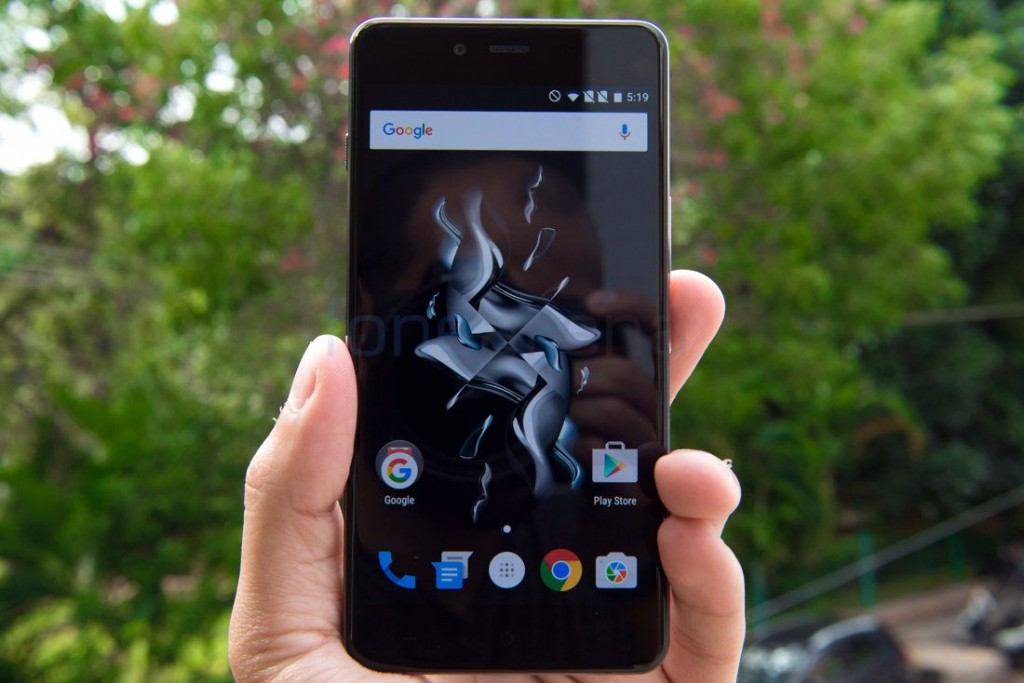
There aren’t any display modes to choose from nor can you adjust the colour temperature. You can wake the device from sleep either by pressing the power key or by double tapping the screen. Users can choose to enable ambient display which will automatically turn on the screen when you receive notifications. This is quite a useful feature and can save you time since you don’t have to manually wake up the device every time to see if you have any notifications. However, it can be quite annoying if you are someone who constantly receives messages on WhatsApp etc. for example. Lastly, there is also a proximity wake feature that makes the phone display the time, date and notifications when you bring your hand close to the device. This makes use of the proximity sensor and is quite useful if you use your mobile phone to tell the time for example.
Software and UI
The OnePlus X comes with Android Lollipop 5.1.1 out of the box with Oxygen UI 2.1.2 on top. The phone should get Android 6.0 Marshmallow as well but OnePlus hasn’t specified when we can expect the update. The overall look and feel of the UI is still very much stock Android and as a result the device is very smooth. However, there are still quite a few unique features that OnePlus have added to make your experience better.
For starters, there is a Dark Mode that you can enable for the system or choose to disable it. (NOTE- We aren’t sure if the update to Android 6.0 Marshmallow will remove this feature or not since Google have chosen to remove it.) You can set the accent colour of your choice as well. Next up is gestures which are basically screen off gestures that you can do when the phone is sleeping. Double tapping the screen will wake the phone up. Drawing an O will open the camera and a V will toggle the flashlight. You can also control your music using gestures. All these gestures can be turned on or off individually or all at once.
Connectivity, Storage and Performance
The OnePlus X is the first smartphone from OnePlus to have a microSD slot. The OnePlus One had either 16GB or 64GB capacities and came with a single micro/nanoSIM slot. The OnePlus 2 added dualSIM ability but came with either 16GB or 64GB capacities as well. The OnePlus X on the other hand comes with a single 16GB storage option for both the Onyx and Ceramic versions but it has a hybrid dual SIM slot.
It can either take two nanoSIMs or one nanoSIM and a microSD card. It accepts microSD cards upto 128GB in capacity. Users can move compatible apps to the SD card as well but as of the date of writing this review, that function doesn’t seem to work well and we keep getting this error message (screenshot below). This however should be solved in the future with a firmware update. The phone has 4G LTE on both the SIM slots however only one SIM can be on 4G at a time while the other will be on 2G. It does support both Band 3 (1800MHz) and Band 40 (2300MHz) in India. The European and Indian variants seem to have the same bands while the American variant has different LTE band support as well as a different model number.
In terms of connectivity, the smartphone has a micro USB port and not a USB Type-C port like on the OnePlus 2. This could be a negative or a positive based on how you view it. There is Bluetooth 4.0 as well as WiFi 802.11 b/g/n. Unfortunately there is no support for Dual-Band WiFi nor ac standard which is a shame for a phone at this price range. The phone does support USB OTG (on-the-go) as well but you need to enable it within the storage settings first to use it.
The smartphone packs a Snapdragon 801 processor as well as 3GB of RAM which is the same combination used on the OnePlus One. In terms of performance too it doesn’t really stand out compared to most smartphones that have come out this year as they pack more powerful processors. In terms of Benchmarks, the device performed decently but not great but the real life performance is good enough. The phone runs smoothly at all times and the main thing to state is that there is hardly any heating even when charging the device. You can see a few of the Benchmark scores below but for a full list of benchmarks, you can check the following article. We will be doing our gaming review of the smartphone soon as well and will keep you posted regarding results of the same.


Conclusion
Although the OnePlus 2 is the flagship in the current lineup of device from OnePlus, it still followed many of the trends set by the OnePlus One and while that is fine for any other company, it isn’t what people expect from OnePlus. For a company that has Never Settle as their slogan, people expect more and that is what they have done with the OnePlus X. The smartphone is probably their boldest move yet, at least when you look at this year. In terms of design and build quality, the OnePlus X easily bests its bigger brother, the OnePlus 2 which is a testament to their craftsmanship. The screen too is beautiful and the phone packs quite a lot of performance into a small form factor. Yes, the processor is a bit dated but there are plenty of people out there who still buy a OnePlus One which also has the same processor. But there are many who shy away from the device largely due to the size and the OnePlus X will definitely try and bring those people back in. Is this is smartphone with no negatives at all? No it isn’t but it is worth the asking price of Rs. 16,999.
Pros
- Brilliant Display
- Great Ergonomics and Design
- Good Build Quality
- Hybrid Dual SIM Slot
- No Overheating
Cons
- Slippery Back
- No Backlighting for Capacitive Keys
- No Dual Band WiFi and 802.11 ac Standard Support
- Feeble LoudspeakerONEPLUS X REVIEW